
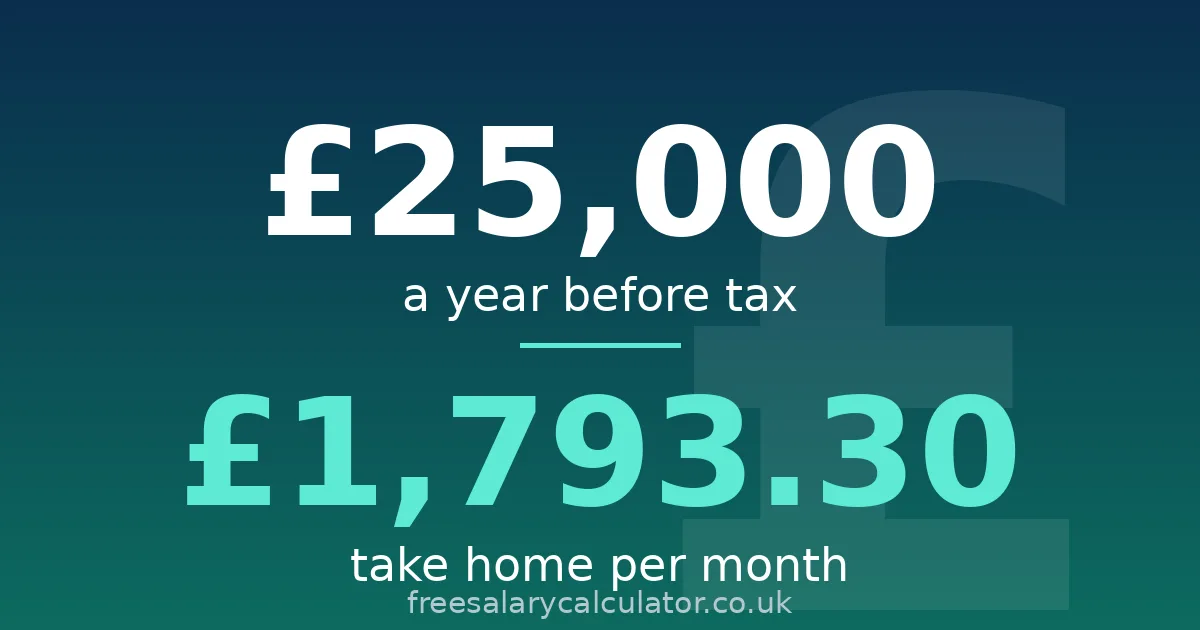
On the average care worker salary of about £25,000, a care worker salary after tax comes to £1,793.30 a month, or £21,520 a year, in the 2026/27 tax year. That is after £2,486 of income tax and £994 of National Insurance. Your exact figure depends on your hours, your hourly rate and any pension or student loan deductions.
Care work is one of the largest jobs in the country, and also one of the lowest paid. Skills for Care counts about 1.59 million filled posts in adult social care in England, with around 96,000 vacancies on a typical day.
This guide works out the real numbers for 2026/27, from the average hourly rate to the monthly pay at three common salary levels, and shows you how to check your own payslip.
What does a care worker earn in the UK?
Skills for Care puts the average care worker hourly rate in England at £12.89 in 2025/26, only 68p above the National Living Wage of £12.21 that applied in that year. From 1 April 2026 the National Living Wage rose to £12.71 an hour for workers aged 21 and over.
A full time week of 37.5 hours at £12.89 an hour earns about £25,136 a year before tax. Work the same hours at the National Living Wage of £12.71 and you earn about £24,785 a year. Senior care workers average £13.62 an hour, which comes to about £26,559 a year on a full time week.
The median care worker salary is lower, at around £22,000 a year according to ONS earnings data, because so much care work is part time. Compare that with the median full time salary across the whole UK, which the Office for National Statistics puts at £40,911.
What is a care worker salary after tax on £25,000?
Take a care worker on £25,000 a year, close to the average rate. You pay £2,486 in income tax and £994 in National Insurance, leaving £21,520 for the year. That works out at £1,793.30 a month or £413.84 a week in your pocket.
The first £12,570 is tax free thanks to the personal allowance, and everything above it up to £50,270 is taxed at the 20% basic rate. These figures assume the standard 1257L tax code. For the full month by month numbers, see our full £25,000 after tax breakdown.
If your hours or rate are different, you can work out your exact take home pay with our free UK salary calculator. In Scotland the tax bands work differently, and £25,000 gives £1,796.61 a month there. You can read how UK income tax bands work for the detail behind these numbers.
Care worker salary after tax at three pay levels
The table shows a care worker salary after tax at the three levels most carers fall into: new starters near the minimum wage, experienced carers on the average rate, and senior carers. The figures are for 2026/27, before pension or student loan deductions.
| Yearly pay | Income tax | National Insurance | Take home a year | Take home a month | Take home a week |
|---|---|---|---|---|---|
| £22,000 | £1,886 | £754 | £19,360 | £1,613.30 | £372.30 |
| £25,000 | £2,486 | £994 | £21,520 | £1,793.30 | £413.84 |
| £28,000 | £3,086 | £1,234 | £23,680 | £1,973.30 | £455.38 |
The jump from £22,000 to £25,000 is worth £180 a month in your pocket, and the jump from £25,000 to £28,000 is worth another £180 a month. Each extra £1,000 of pay adds about £60 a month after tax and National Insurance at this level.
On £22,000, close to the median care worker salary, you keep £1,613.30 a month. A senior care worker on £28,000 keeps £1,973.30 a month, £360 a month more than the median. See the full £22,000 after tax breakdown for the weekly and daily figures.
How is a care worker salary after tax worked out?
Care workers pay tax through PAYE, the same system as almost every other employee in the UK. Your employer takes income tax and National Insurance from your pay before it reaches your bank account. You pay no income tax on the first £12,570 you earn in the year, then 20% on everything above that up to £50,270.
National Insurance works in a similar way. You pay 8% on earnings above £12,570 up to £50,270, and 2% on anything above that.
On a £25,000 salary that comes to £994 a year. A workplace pension changes the picture: put 5% in through salary sacrifice and your monthly take home pay falls to £1,718.30, but you save tax and National Insurance on the contribution.
Student loans are the other deduction to watch. On £25,000 you are below the Plan 2 repayment threshold of £29,385, so no student loan is deducted.
A postgraduate loan is different: 6% above £21,000 means £20 a month, or £240 a year, on this salary. In Scotland the income tax bands are different, and you keep a little more at these pay levels.
What changes a care worker take home pay?
Your hours are the biggest influence on a care worker salary after tax. A carer on £12.89 an hour working 25 hours a week earns about £16,757 a year, while the same rate on a 37.5 hour week earns about £25,136. Skills for Care data shows around half the workforce usually works part time.
Overtime and unsocial hours can lift pay in a good month. Evening, night and weekend shifts often carry an extra payment, and bank holiday work usually pays more again. Sleep in shifts are usually paid at a set rate for the night, so check how your employer counts them.
How can a care worker earn more?
The clearest route to higher pay is the step up to senior care worker. The average senior rate of £13.62 an hour is worth about £1,423 a year more than the average care worker rate on a full time week. Senior roles usually ask for experience and a Level 3 qualification in health and social care, with extra duties such as supervising shifts and handling medication.
Extra qualifications open other doors too. A Level 3 diploma can lead to team leader roles, and from there to deputy manager and registered manager posts. Specialist work also pays more: dementia care, end of life care and complex care roles often carry higher rates than general care work.
NHS healthcare assistant roles are worth comparing too, since NHS Band 2 pay starts at £25,272 in 2026/27. Our NHS pay bands after tax guide shows what each band leaves you with. Changing employer is often the fastest pay rise in care: Skills for Care puts the vacancy rate at 6.2% in 2025/26, yet around 96,000 posts still sit empty, so good carers are in demand.
How to check your payslip in five steps
Check your payslip every month. These five steps catch mistakes early:
- Check your gross pay first. Multiply your hourly rate by the hours you worked, including overtime, and compare it with the gross pay on the slip.
- Check your tax code. The standard code is 1257L. If your code is different, ask your employer or check with HMRC, because the wrong code can mean you overpay tax during the year.
- Check your National Insurance. On a £25,000 salary it should be about £82.87 a month. A figure far above that may mean your employer has used the wrong threshold.
- Check your pension deduction. If you pay 5% through salary sacrifice on £25,000, the deduction should be £104.17 a month, and your take home pay should be £1,718.30.
- Check your hours and travel time. Make sure every shift you worked is listed, including sleep in shifts and travel between clients, and raise missing hours with your manager the same week.
Frequently asked questions
What is a care worker salary after tax in the UK?
On the average care worker salary of about £25,000, a care worker salary after tax comes to £1,793.30 a month, or £21,520 a year, in the 2026/27 tax year. On the median salary of about £22,000, you take home £1,613.30 a month.
What is the average hourly rate for a care worker?
Skills for Care puts the average care worker hourly rate in England at £12.89 in 2025/26, and the senior rate at £13.62 an hour. The National Living Wage is £12.71 an hour for workers aged 21 and over from 1 April 2026.
Do care workers pay tax?
Yes. Care workers pay income tax and National Insurance through PAYE like other employees, with no tax on the first £12,570 and 20% on pay above that up to £50,270. On £25,000 that comes to £2,486 of income tax and £994 of National Insurance a year.
Is £25,000 a good salary for a care worker?
It is close to the average full time pay for the role, and it clears the National Living Wage by about £215 a year. It sits well below the UK median full time salary of £40,911, so it is a modest wage.
The bottom line on care worker pay
Care work pays close to the legal minimum, and a care worker salary after tax shows exactly what that means: £1,613.30 a month on the median salary of £22,000, and £1,793.30 a month on the average full time salary of £25,000. The fastest ways to close the gap are a move to senior care worker, extra qualifications, or a switch to an employer who pays for travel time.
Whatever your rate, check your payslip every month and know your exact take home pay. You can see what each salary level leaves you with in our take home pay tables.