
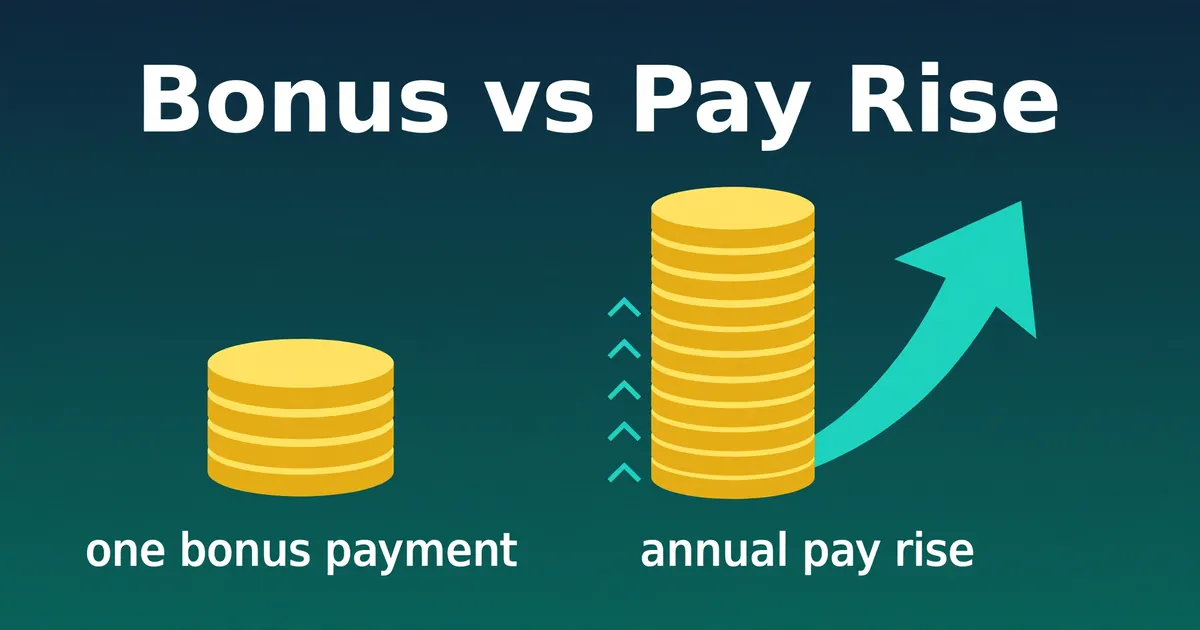
Bonus vs pay rise after tax comes down to one fact. On £35,000, a £5,000 bonus and a £5,000 pay rise both leave £3,600 in your pocket in year one. The difference is what happens next, because the rise repeats every year while the bonus is paid once.
You may be choosing between two job offers, one with a bonus and one with a higher salary. Either way, bonus vs pay rise after tax is the comparison that settles it, and this guide works it out with real 2026/27 figures.
Is a bonus taxed the same as a pay rise?
Yes. A cash bonus is taxed as normal pay through PAYE, at the same marginal rate as your salary, and National Insurance is charged in the same way. There is no special bonus tax rate in the UK, so a bonus and a pay rise of the same size cost you the same tax in year one.
The confusion comes from the payslip. A bonus is usually paid in one month, so the tax on that month looks large. On the standard cumulative tax code the tax works out the same by the end of the year, and our guide to why a bonus can look heavily taxed explains the payslip effect in full.
The rate that applies is your marginal rate, the rate on the top slice of your income. A basic rate taxpayer pays 20% income tax and 8% National Insurance, so keeps 72p in every extra pound.
A higher rate taxpayer pays 40% income tax and 2% National Insurance, so keeps 58p. You can read how UK income tax bands work if you want the detail behind these rates.
Worked example: £5,000 bonus or £5,000 rise on £35,000
Take a worker on £35,000 a year, with take home pay of £2,393.30 a month after income tax and National Insurance. Now compare the two options, and this is where bonus vs pay rise after tax gets interesting.
With a £5,000 bonus, total pay for the year is £40,000 and take home pay rises to £32,319.60 a year, or £2,693.30 a month. The bonus is worth £3,600 after tax, which is £300 a month for one year only. See the full £35,000 after tax breakdown for the starting figures.
With a £5,000 pay rise, the salary becomes £40,000 and take home pay is exactly the same, £32,319.60 a year. The rise is also worth £3,600 after tax in year one, because the whole £5,000 sits in the basic rate band and keeps 72%. The £40,000 total sits just below the UK median full time salary of £40,911 from the Office for National Statistics.
So in year one there is no difference at all. The difference is entirely about what happens in year two and beyond.
Why a pay rise wins over five years
A pay rise is permanent, and that is the heart of bonus vs pay rise after tax. The £5,000 stays in your salary every year, so over five years the rise is worth £18,000 after tax, while a bonus paid once is worth £3,600.
The gap grows wider still, because future rises are a percentage of your new salary. A 5% rise on £40,000 is £2,000, while 5% on £35,000 is £1,750.
A higher salary also lifts your pension. A 5% pension contribution on the extra £5,000 puts £250 a year into your pension, and your employer typically adds 3%, another £150.
There is one cost to count. If you have a Plan 2 student loan, 9% of earnings above £29,385 goes to the loan, so a £5,000 rise at £35,000 adds £450 a year in repayments and leaves £3,150 in your pocket.
The same £5,000 at £55,000
The maths changes as your salary rises, because the marginal rate rises with it. On £55,000 a year, take home pay is £3,538.12 a month. A £5,000 bonus or a £5,000 rise takes total pay to £60,000, where take home pay is £45,357.40 a year.
That is £2,900 a year kept from the £5,000, or about £242 a month, because the whole £5,000 sits above the £50,270 higher rate line and keeps 58%. Once again, bonus vs pay rise after tax gives the same answer in year one.
Compare the two salary levels with our salary comparison tool, and see what each salary level leaves you with in our take home pay tables.
What changes near £100,000?
Near £100,000 the comparison changes sharply. Above £100,000, your personal allowance of £12,570 is taken away at £1 for every £2 you earn, and it is gone at £125,140. In that stretch you keep only 38p in every extra pound.
On £100,000 a year, take home pay is £68,557.40 a year, or £5,713.12 a month. A £5,000 bonus or rise takes pay to £105,000, where take home pay is £70,457.40 a year, so only £1,900 of the £5,000 stays in your pocket. Bonus vs pay rise after tax gives the same answer here too.
A £10,000 bonus on a £110,000 salary keeps just £3,800, and a rise from £100,000 to £125,140 adds only £9,553 to take home pay. Those figures come from the 2026/27 rates published by HMRC, with the basic rate limit of £37,700 and the personal allowance taper.
There is a second cost above £100,000. You lose Tax Free Childcare, worth up to £2,000 per child per year, and 30 hours of free childcare.
For a parent with two young children, a small rise that crosses £100,000 can leave the family worse off. In that position, taking the money as pension contributions through salary sacrifice can be worth far more than cash.
When a bonus is the better choice
A bonus wins when you do not want your base salary to rise. If a rise would push you over £100,000 and cost you childcare support, a one off bonus can be the smarter move. The same applies when the money is genuinely one off, such as a company profit share.
Timing matters too. If your income varies, a bonus taken in a lower earning year can be taxed at a lower rate than a permanent rise. And if you are about to change jobs, a bonus already agreed is money in hand, while a pay rise does not follow you.
A third option beats both in some cases. Pension contributions through salary sacrifice go in before income tax and National Insurance, so the full £5,000 reaches your pension.
You cannot spend it now, but it is worth far more than the £3,600 or £2,900 you would keep as cash. Work out your own numbers with our free UK salary calculator.
How to work out your own figures in five steps
These five steps turn bonus vs pay rise after tax from a guess into a figure you can prove.
- Find your marginal rate. Below £50,270 you keep 72p in every extra pound, between £50,270 and £100,000 you keep 58p, and between £100,000 and £125,140 you keep 38p.
- Multiply the bonus or rise by the rate you keep. A £5,000 rise at the basic rate keeps £3,600, at the higher rate keeps £2,900, and in the taper zone keeps £1,900.
- Multiply the yearly gain by five to see what a rise is worth over five years.
- Check the extras. A student loan takes 9% of the extra above £29,385, and a pension contribution takes a slice that your employer may match.
- Check the £100,000 line. If a rise would cross it, work out the childcare and allowance cost before you accept cash.
Frequently asked questions
Is a bonus taxed more than a pay rise?
No. Both are taxed at the same marginal rate, so they leave the same amount in your pocket in year one. The difference is that a pay rise repeats every year while a bonus is paid once.
How much of a £5,000 bonus do I keep after tax?
On £35,000 you keep £3,600, which is 72% after 20% income tax and 8% National Insurance. On £55,000 you keep £2,900, and between £100,000 and £125,140 you keep only £1,900.
Should I take a bonus or a pay rise?
Take the pay rise in most cases, because it repeats every year and lifts future rises and pension contributions. Take the bonus when a rise would push you over £100,000 and cost you childcare support, or when the money is genuinely one off.
Does a bonus affect my pension or student loan?
Yes. A bonus counts as pensionable pay, and a Plan 2 student loan takes 9% of it above £29,385. A pay rise has the same effect, but it also lifts your pension contributions every year after.
The verdict
In year one, a bonus and a pay rise of the same size are worth exactly the same after tax, £3,600 from £5,000 at the basic rate. Over five years the rise is worth £18,000 and the bonus £3,600, so the rise wins by a wide margin.
The one exception is the £100,000 line, where either option keeps only 38p in the pound and a cash rise can cost you childcare support. Know your marginal rate, work out the five year figure, and choose with the numbers in front of you.
Bonus vs pay rise after tax is a simple comparison once you know your rate, and now you do. Use our free UK salary calculator to check your own figures before your next pay review.