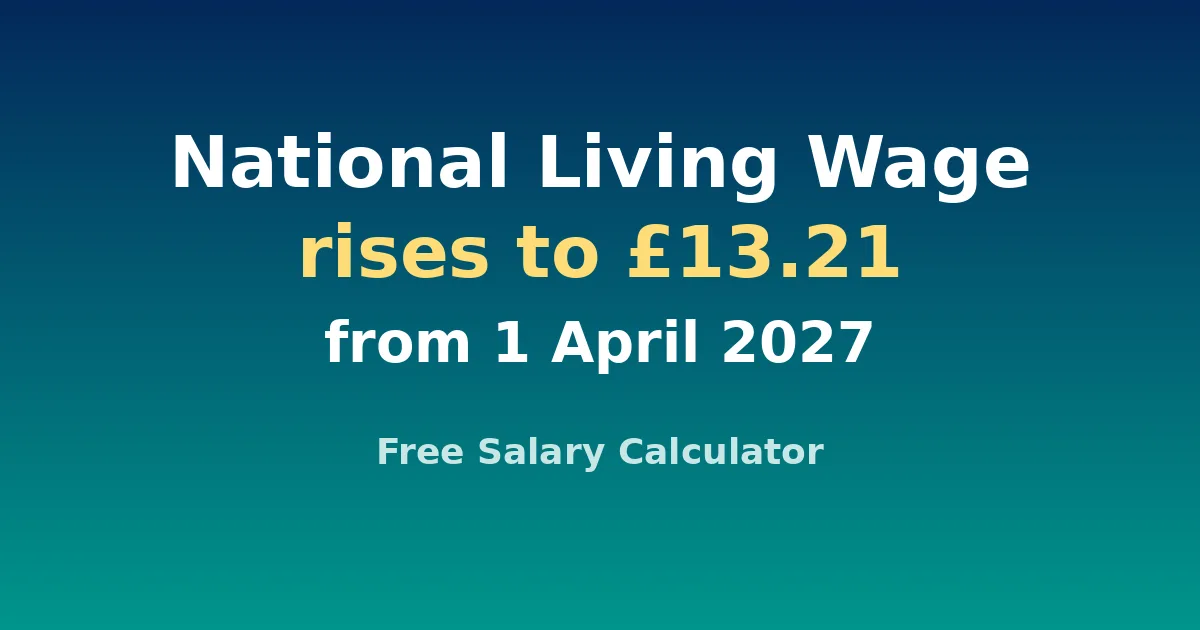
The government has confirmed that the National Living Wage will rise to £13.21 an hour from 1 April 2027, a rise of 3.9% announced in Budget 2026 on 28 October 2026. It is expected to benefit around 2.3 million workers. If you earn the minimum rate, your gross pay will rise next April.
What it means for your take home pay
A higher hourly rate means higher gross pay, but it does not mean you keep every extra pound. Income tax and National Insurance still apply once your pay passes the thresholds that apply to you. That is why the figure that matters most is your take home pay, not just your hourly rate.
Use our free salary calculator to check what the new rate means for you. Enter your hours and your new yearly pay and it will show your monthly take home pay after tax and National Insurance. It is the quickest way to turn the Budget headline into a number you can plan around.
Budget 2026 did not announce a rise in the headline rates of income tax or National Insurance. The government said in the Budget document that it is protecting most people from tax increases at this Budget.
The new rates in full
The government has accepted the Low Pay Commission recommendations in full. The new rates apply from 1 April 2027.
| Who the rate covers | Now | From 1 April 2027 |
|---|---|---|
| National Living Wage, aged 21 and over | £12.71 an hour | £13.21 an hour |
| National Minimum Wage, aged 18 to 20 | £10.85 an hour | £11.27 an hour |
| National Minimum Wage, aged 16 to 17 and eligible apprentices | £8.00 an hour | £8.31 an hour |
| Accommodation offset | £11.10 a day | £11.53 a day |
The government puts the gross gain for a full time worker on the National Living Wage at £910 a year. Your own gain depends on your hours. Part time workers will see a smaller rise in total pay, because the rise applies to each hour worked.
What to check before April 2027
Check your contract and your payslip when the new rate starts. Your employer must pay at least the new minimum for your age group from 1 April 2027. If your pay is worked out over a longer period, check that the average still meets the new rate.
If you are close to the new rate, the salary tables page can help you compare yearly pay levels at a glance. For an exact monthly figure for your own hours, use the salary calculator linked above.
Source
Source: HM Treasury, Budget 2026, published on GOV.UK on 28 October 2026. The Budget document states the new rates, the 3.9% rise, the 1 April 2027 start date and the expected benefit to around 2.3 million workers. Read the official document here: Budget 2026 on GOV.UK.