
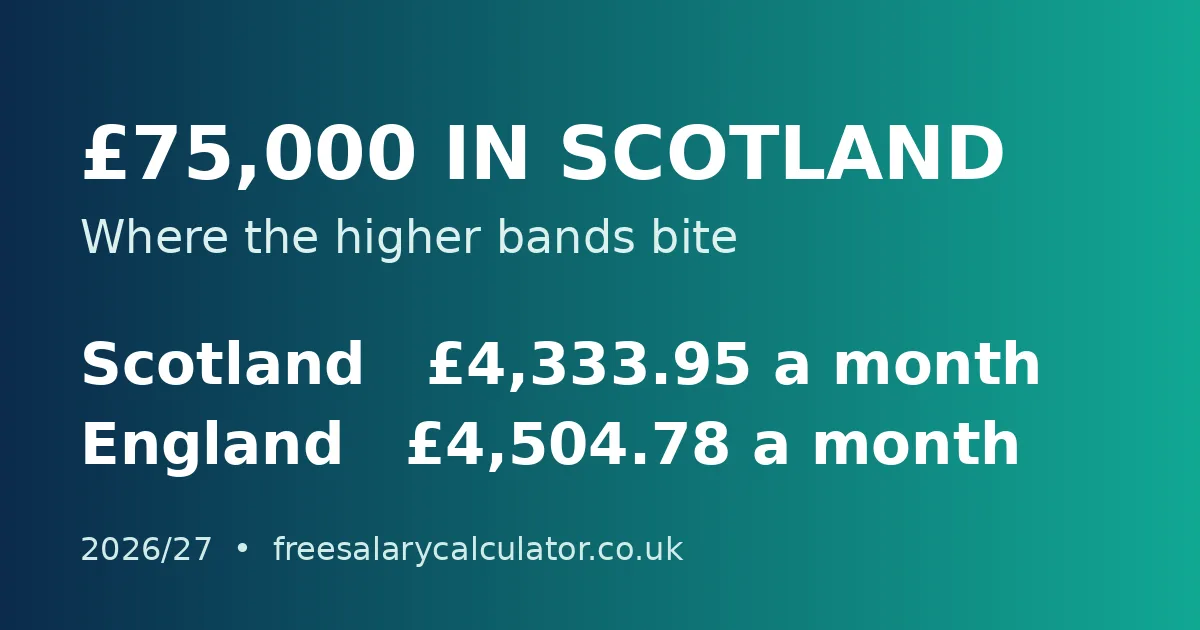
On £75,000 in Scotland you take home £4,333.95 a month after tax and National Insurance in 2026/27. The same salary in England pays £4,504.78 a month, so Scotland is £170.83 a month behind. This £75,000 salary Scotland after tax guide explains where that gap comes from, and what the next pound you earn will cost.
Why does £75,000 sit on a tax boundary in Scotland?
Scotland sets its own income tax rates and bands, while England, Wales and Northern Ireland use the UK rates. The personal allowance is £12,570 in both systems, and National Insurance is also the same across the UK, so income tax alone explains the gap.
What decides your tax region is where you live, not where you work. If your main home is in Scotland you are a Scottish taxpayer, even if your employer sits in England, and your tax code shows this with an S at the start, for example S1257L.
Scotland has six bands in 2026/27, set out in the Scottish Budget: starter 19 percent to £16,537, basic 20 percent to £29,526, intermediate 21 percent to £43,662, higher 42 percent to £75,000, advanced 45 percent to £125,140 and top 48 percent above that. That makes £75,000 the last pound taxed at 42 percent, and the first pound above it is taxed at 45 percent.
England has no boundary at £75,000. Its 40 percent rate runs from £50,271 to £125,140, so £75,000 sits in the middle of that band. That contrast is the whole story here.
Worked example: £75,000 in Scotland
Start with the £12,570 tax free allowance. The starter slice is £3,967 at 19 percent (£753.73) and the basic slice is £12,989 at 20 percent (£2,597.80).
The intermediate slice is £14,136 at 21 percent (£2,968.56) and the higher slice is £31,338 at 42 percent (£13,161.96). That last slice alone costs more than the first three slices put together.
Add the four slices together and Scottish income tax on £75,000 is £19,482.05. National Insurance is £3,510.60, at 8 percent of pay between £12,570 and £50,270 plus 2 percent above £50,270. Take £75,000, subtract both deductions, and you are left with £52,007.35 for the year.
That is £4,333.95 a month and £1,000.14 a week. This £75,000 salary Scotland after tax result is the figure to use when you budget, not the £75,000 headline.
| Scotland slice | Amount taxed | Rate | Tax |
|---|---|---|---|
| Tax free allowance | £12,570 | 0 percent | £0 |
| Starter band | £3,967 | 19 percent | £753.73 |
| Basic band | £12,989 | 20 percent | £2,597.80 |
| Intermediate band | £14,136 | 21 percent | £2,968.56 |
| Higher band | £31,338 | 42 percent | £13,161.96 |
| Total income tax | £62,430 | Mixed | £19,482.05 |
See our £75,000 after tax page and our Scottish income tax guide for the full bands.
Worked example: the same £75,000 in England
England works in a simpler way at this salary. The taxable slice is £62,430. The first £37,700 is taxed at 20 percent (£7,540) and the remaining £24,730 at 40 percent (£9,892).
Add those two parts together and English income tax on £75,000 is £17,432. National Insurance is the same as in Scotland, at £3,510.60, because it is set across the whole UK. Take £75,000, subtract both deductions, and you are left with £54,057.40 for the year.
That is £4,504.78 a month and £1,039.57 a week. This £75,000 salary Scotland after tax comparison turns on one number: Scotland charges £2,050.05 more income tax over the year.
| Figure | Scotland | England |
|---|---|---|
| Income tax | £19,482.05 | £17,432 |
| National Insurance | £3,510.60 | £3,510.60 |
| Take home a year | £52,007.35 | £54,057.40 |
| Take home a month | £4,333.95 | £4,504.78 |
| Take home a week | £1,000.14 | £1,039.57 |
The gap is large because £75,000 sits at the top of the Scottish system, not in the middle of it. More than two thirds of the Scottish tax bill comes from the 42 percent slice alone, while England taxes that slice at 40 percent. Our Scotland versus England comparison shows how the gap grows with pay.
What happens to the next £1,000 you earn?
This £75,000 salary Scotland after tax boundary is where a pay rise gets expensive. A £1,000 pay rise from £75,000 to £76,000 costs £450 of Scottish tax at 45 percent plus £20 of National Insurance. You keep £530 of that rise in Scotland.
The same £1,000 rise in England is taxed at 40 percent (£400) plus £20 of National Insurance, so you keep £580. The Scottish rise is therefore worth £50 less, and every further £1,000 rise stays £50 behind until pay reaches £125,140, where England also moves to 45 percent.
That marginal difference is easy to miss in a salary negotiation. A £76,000 offer in Scotland pays only £530 a year more after tax than £75,000 in Scotland. Know this boundary before you accept a rise that just crosses it.
What do a student loan and a pension do?
A Plan 2 student loan is the same in Scotland and England. A Plan 2 borrower repays 9 percent of earnings above £29,385, under Student Loans Company rules. On £75,000 that is 9 percent of £45,615, which is £4,105.35 a year, or £342.11 a month.
Subtract that loan repayment and a Plan 2 borrower keeps £3,991.83 a month in Scotland. The same borrower in England keeps £4,162.67 a month. The £170.83 monthly gap does not change, because the loan repayment is identical in both places.
A pension paid through salary sacrifice works differently, because it lowers the salary that tax is charged on. Paying 5 percent of £75,000 into a pension is £312.50 a month, which leaves £71,250 for tax purposes. Scottish tax on £71,250 is £17,907.05 and National Insurance is £3,435.60, so cash take home is £4,158.95 a month, while £312.50 a month goes into the pension.
That trade matters most near a band boundary, because the pension money avoids the 42 percent band entirely and also avoids National Insurance on that slice. This £75,000 salary Scotland after tax example shows why a pension decision matters more here than in the middle of a band.
For a clean comparison of two offers, use our salary comparison tool and our free UK salary calculator with your exact settings.
Is £75,000 a good salary in Scotland?
On pay alone, £75,000 is a strong salary. The Office for National Statistics Annual Survey of Hours and Earnings puts median full time gross pay at £39,039, so £75,000 is almost double the typical full time salary.
Whether it feels good still depends on where you live. In Edinburgh, £4,333.95 a month still covers a comfortable flat, bills, food and transport with room to save for most people. In Glasgow, Aberdeen or Dundee, the same pay stretches further, because housing costs are lower.
The honest test is your own monthly budget. Write down rent, bills, food, transport, loan repayments and savings, then compare the total with £4,333.95. If the total fits with money left over, this £75,000 salary Scotland after tax level works very well for you in Scotland.
Our UK income tax guide explains the English bands.
Practical steps: check your payslip
First, check your payslip tax code starts with S if you live in Scotland. Second, check it matches where you actually live, because residence decides the region, not your office location. Third, compare the monthly income tax line with £1,623.50, which is £19,482.05 divided by 12.
Fourth, compare the National Insurance line with £292.55 a month, which is £3,510.60 divided by 12. Fifth, if either figure looks far out, ask payroll to check your code, because a wrong code is the usual cause. Sixth, repeat the check when pay crosses £75,000, because that is where the 45 percent rate starts.
Finally, if you are weighing a job offer in the other nation, compare the after tax figures before the gross salaries. At £75,000 the nations differ by £170.83 a month, so the better offer is usually the one with the better job and location. This £75,000 salary Scotland after tax check takes five minutes and stops a headline salary from misleading you.
Frequently asked questions
How much is £75,000 a month after tax in Scotland?
£4,333.95 a month in 2026/27, after £19,482.05 of income tax and £3,510.60 of National Insurance. That is £52,007.35 for the year and £1,000.14 a week.
Do you pay more tax in Scotland on £75,000?
Yes, by £2,050.05 a year. Scottish income tax on £75,000 is £19,482.05, against £17,432 in England, and National Insurance is identical at £3,510.60 in both places.
What tax code should a Scottish worker on £75,000 have?
Most Scottish employees on the standard allowance have the code S1257L. The S shows you are a Scottish taxpayer, and 1257L reflects the £12,570 personal allowance. If your code is different, check why before you assume an error.
Is £75,000 better in Scotland or England?
On take home pay alone, England is better by £170.83 a month at this £75,000 salary Scotland after tax level, on the rounded monthly figures. That gap is real, but rent, bills, commute and the job itself should still decide the choice, not the tax difference alone.
So where do the higher bands bite hardest?
In plain terms, the higher bands bite hardest right here, at the boundary itself. Below £43,662 Scotland charges at most 21 percent. At £75,000 the full 42 percent slice is in play, the gap reaches £2,050.05 a year, and the next pound is taxed at 45 percent.
Use £4,333.95 a month as your Scotland budgeting figure, check your S code, and judge any rise or offer on what you keep after tax. This £75,000 salary Scotland after tax picture is the full story of a salary that sits exactly where Scotland changes gear.