
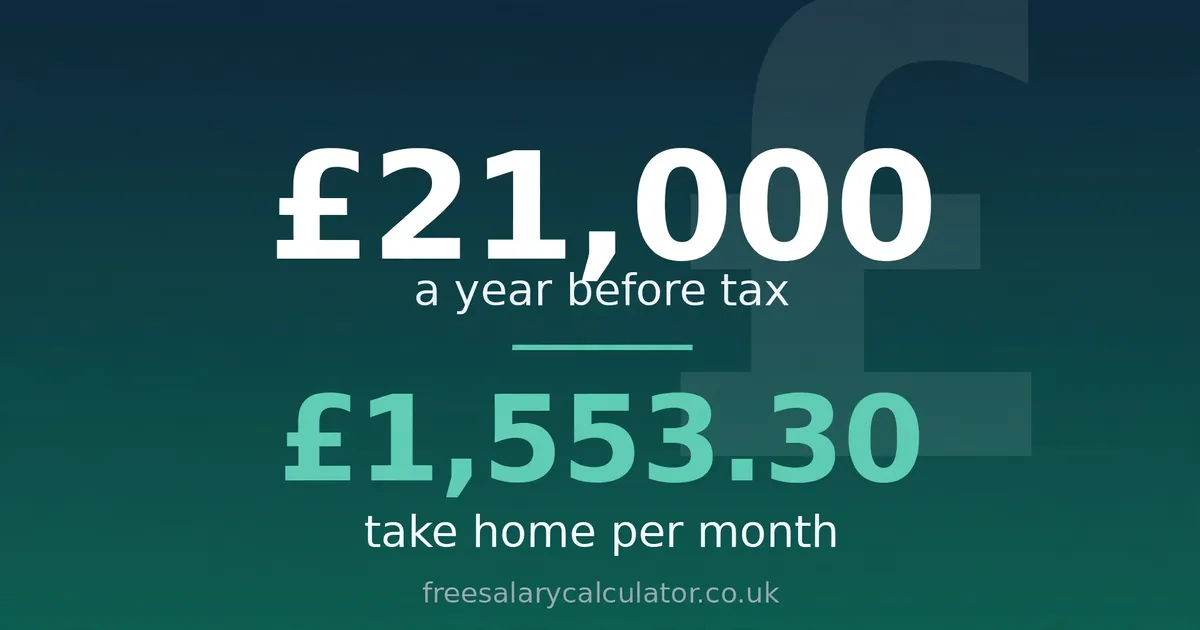
Pro rata salary explained: it is the share of a full time wage that matches the hours you actually work. A £35,000 job worked three days a week pays £21,000 a year, which is £1,553.30 take home a month after tax. This guide shows the formula, worked examples, and how your holiday and rights scale with your hours.
What does pro rata mean in plain English?
Pro rata is Latin for in proportion. In UK pay it means your salary is scaled to the hours you work, so a part time worker earns the same hourly rate as a full time worker. If the full time job pays £30,000 for a 37.5 hour week and you work half those hours, your pay is £15,000 a year.
That is it at its simplest: your pay follows your hours, nothing more. The same idea covers job shares and anyone who joins or leaves part way through a pay period.
How do you work out a pro rata salary?
The formula is the heart of it, so here it is in plain steps. Divide the hours you work each week by the full time hours for the role, then multiply the full time annual salary by that share.
A 22.5 hour week against a 37.5 hour full time week is 60% of full time, so a £35,000 salary becomes £21,000. Always check what the employer counts as full time first: the same 22.5 hours is 60% of a 37.5 hour week but only 56% of a 40 hour week.
If you work fewer weeks in the year, multiply once more by the weeks you work divided by 52. Check any result with our free pro rata calculator.
Worked example: three days a week on a £35,000 salary
This worked example puts it into real numbers. Take a job advertised at £35,000 a year for a 37.5 hour week. You work three days a week, 22.5 hours, or 60% of full time, so your pro rata salary is £21,000 a year before tax.
Your hourly rate stays the same: £35,000 divided by 1,950 hours a year is £17.95 an hour, and so is £21,000 divided by 1,170 hours. On £21,000 in the 2026/27 tax year you pay £1,686 in income tax and £674.40 in National Insurance, leaving £18,639.60 for the year, which is £1,553.30 a month.
See our full £21,000 after tax breakdown for the month by month numbers. Here is the part most people miss: the full time worker on £35,000 takes home £2,393.30 a month, so you earn 60% of the gross pay but about 65% of the take home pay, because your tax free personal allowance is not scaled down.
What does part time pay look like at different hours?
Here is what a £30,000 full time salary pays at common part time patterns in the 2026/27 tax year, using the standard 1257L tax code.
| Hours a week | Share of full time | Pro rata salary | Take home a month |
|---|---|---|---|
| 15 hours | 40% | £12,000 | £1,000.00 |
| 18.75 hours | 50% | £15,000 | £1,193.30 |
| 22.5 hours | 60% | £18,000 | £1,373.30 |
| 30 hours | 80% | £24,000 | £1,733.30 |
| 37.5 hours | 100% | £30,000 | £2,093.30 |
Notice the first row. On £12,000 a year you pay no income tax and no National Insurance at all, because the salary sits below the £12,570 thresholds for both. Every pound is yours to keep, so the take home pay is a round £1,000 a month.
As hours rise, tax and National Insurance take a growing share: the jump from 80% to full time adds £360 a month, while the jump from 40% to 50% adds only £193.30. Our take home pay tables show every salary level.
Does pro rata change how much tax you pay?
With that in mind, the tax side makes sense once you know one fact: your tax free personal allowance is not pro rated. Everyone gets the same £12,570 tax free in the 2026/27 tax year, and income tax is then charged at 20% above that allowance up to £50,270.
National Insurance is charged at 8% on earnings above £12,570 up to the same £50,270 limit. Because the allowance shelters a bigger share of a smaller salary, part time workers keep more of each pound they earn.
On £18,000 you keep £16,479.60, about 92% of the gross, while the full time worker on £30,000 keeps £25,119.60, about 84%.
How does pro rata change your holiday?
Your holiday is scaled in exactly the same proportion as your pay. Almost every UK worker is entitled to at least 5.6 weeks of paid holiday a year under the Working Time Regulations 1998, which is 28 days for a five day week. For a part time worker, multiply the days you work each week by 5.6.
Three days a week gives 16.8 days a year, four days gives 22.4 days, and two days gives 11.2 days. If your hours vary, irregular hours workers build up holiday at 12.07% of the hours they actually work in each pay period, for leave years starting on or after 1 April 2024.
Your employer cannot round your entitlement down. GOV.UK publishes the full rules on its holiday entitlement page.
How does pro rata work for term time jobs?
Term time jobs work in two steps, because both hours and weeks shrink. Teaching assistants and school staff often work only during the 39 school weeks of the year, so their pay is scaled for the weeks as well as the hours.
Take a £28,000 full time salary for a 37.5 hour week. Work the same hours but only 39 weeks, and you multiply £28,000 by 39 divided by 52, which gives £21,000 a year.
Many employers spread it over 12 equal monthly payments, so you are paid through the school holidays too. On £21,000 the take home pay is £1,553.30 a month, the same as our three day a week example, because the gross pay is the same.
What are your rights as a part time worker?
The law sits behind this, and it protects part time workers from unfair treatment. Under the Part Time Workers Regulations 2000, a part time worker must not be treated less favourably than a comparable full time worker in the same role. That means the same hourly rate, the same share of holiday, and pro rata access to benefits such as sick pay and pensions.
Your employer cannot pay you a lower hourly rate simply because you work fewer hours. One floor to watch is the National Living Wage, which is £12.71 an hour for workers aged 21 and over from April 2026. Work out your hourly rate by dividing your annual salary by your weekly hours times 52, and if the answer is below £12.71, your pay is unlawful and you should raise it with your employer.
How to check your payslip in five steps
A quick payslip check turns the theory into proof. Run through these five steps when you start a new part time role, or whenever your hours change.
- Find the full time salary and hours in your contract or job advert, and ask your employer in writing if the advert says pro rata without giving the full time figure.
- Work out your share: divide your weekly hours by the full time weekly hours, then multiply the full time salary by that share, and check it against the gross pay on your first payslip.
- Check your hourly rate: divide your annual salary by your weekly hours times 52. It should match the full time rate, and it must be at least £12.71 an hour from April 2026.
- Check your tax code. The standard code is 1257L, and the wrong code can mean you overpay tax during the year.
- Check your holiday line. Multiply the days you work each week by 5.6 and compare it with the balance your employer records. If any figure looks wrong, raise it with payroll and keep copies of your contract and payslips.
Frequently asked questions
What does pro rata mean for salary?
Pro rata means in proportion. A pro rata salary is the full time salary scaled down to match the hours you work.
How do I calculate my pro rata salary?
Divide your weekly hours by the full time weekly hours, then multiply the full time salary by that share. For example, 22.5 hours against a 37.5 hour week is 60%, so £35,000 becomes £21,000.
Is pro rata salary before or after tax?
Pro rata salary is always worked out on gross pay, before tax. Tax and National Insurance are then taken from that lower amount, using the same £12,570 personal allowance.
Does pro rata affect my holiday entitlement?
Yes, your holiday scales in the same proportion as your pay. Multiply the days you work each week by 5.6, so three days a week gives 16.8 days of paid holiday a year.
The verdict
In one sentence: your salary follows your hours, your hourly rate stays the same, and your holiday scales in the same proportion. The two details that catch people out are the full time hours figure and the tax side, where the full personal allowance works in your favour.
Before you accept a part time offer, work out the pro rata salary, check the hourly rate against the National Living Wage, and confirm your holiday days in writing. Our free UK salary calculator gives you the exact take home figure in seconds.