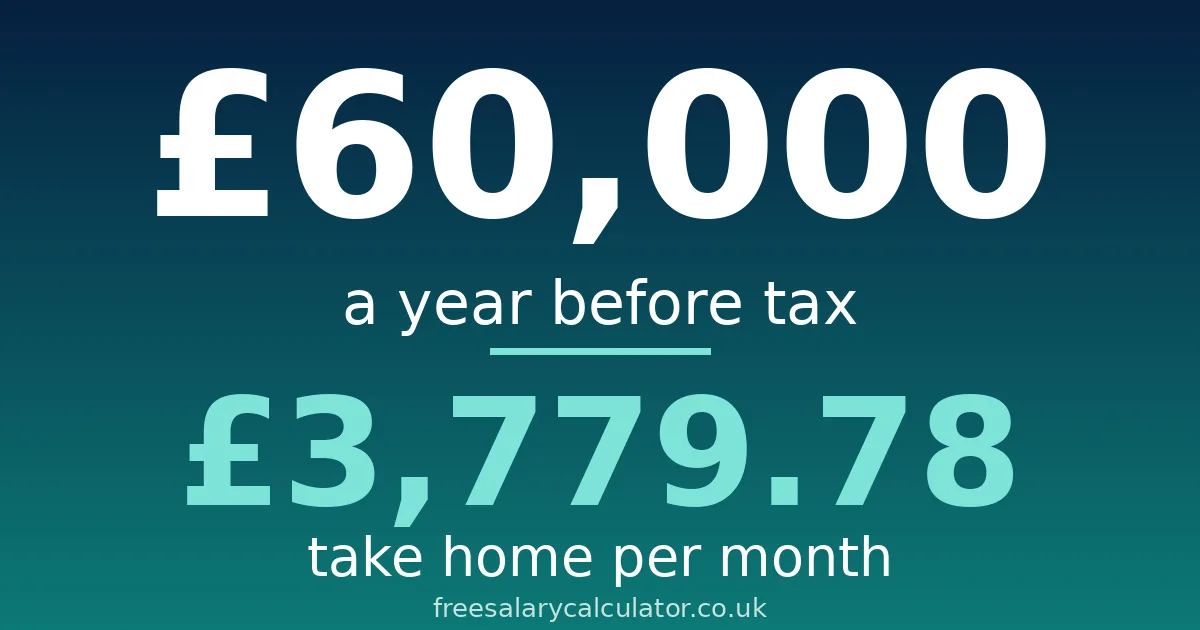
Yes, it is a strong salary. Is £60,000 a good salary in the UK? After tax and National Insurance you keep £3,779.78 a month, over one and a half times the national median wage. It buys a comfortable life across most of the country, including London with sensible choices.
Is £60,000 a good salary? It is one of the most searched salary questions in Britain, and the honest answer is that it depends on where you live and what you want your money to do. After income tax and National Insurance you take home £3,779.78 a month, over £35,000 above the legal minimum and about £21,000 above the typical full time wage. This is also where the 40% higher rate of income tax starts to apply, so in this guide we break down exactly what £60,000 leaves in your pocket each month and how far it stretches around the country.
What £60,000 looks like after tax
On a £60,000 salary in the 2026/27 tax year you pay £11,432 in income tax and £3,210.60 in National Insurance, leaving £45,357 for the year. That works out at £3,779.78 a month or £872.26 a week in your pocket. The first £12,570 is tax free thanks to the personal allowance. Earnings above it up to £50,270 are taxed at the 20% basic rate, and the remaining £9,730 is taxed at the 40% higher rate. These figures assume the standard 1257L tax code with no adjustments. For the full month by month numbers, see our full £60,000 after tax breakdown. If your situation is different, for example you pay into a pension or have a student loan, you can work out your exact take home pay with our free UK salary calculator. On student loans: with a Plan 2 loan you repay 9% of earnings above £29,385, which comes to £229.61 a month on this salary and leaves £3,550.17 a month in your pocket. In Scotland the tax bands work differently, and £60,000 gives £3,633.95 a month there.
What does the 40% higher rate mean for you?
£60,000 is the first salary in this series to cross the higher rate threshold. HMRC sets the threshold at £50,270 for England, Wales and Northern Ireland. Every pound you earn above it is taxed at 40% instead of 20%. On a £60,000 salary that means £9,730 of your income falls in the higher band. Put simply, of your last £1,000 of salary you keep about £580, because National Insurance also rises to 2% above the threshold. This is why pay rises can feel smaller than expected once you pass the threshold. The silver lining is pension saving. Salary sacrifice contributions avoid income tax at the rate you would have paid, so they save you tax at 40% rather than 20%. You can read how UK income tax bands work if you want the detail behind these numbers.
Is £60,000 a good salary compared with the UK average?
The Office for National Statistics publishes the Annual Survey of Hours and Earnings each year, and the latest figures put the median full time salary at £39,039. The median is the middle point, with half of full time employees earning more and half earning less. At £60,000 you earn about 154% of that median, roughly £21,000 a year above the typical full time wage. That is a clear step into well above average earnings territory, with the usual caveat that pay varies hugely by industry, region and career stage.
Is £60,000 a good salary compared with the minimum wage?
The National Living Wage is £12.71 an hour for workers aged 21 and over from April 2026, set on the advice of the Low Pay Commission. Full time work at 37.5 hours a week on that rate earns about £24,785 a year before tax, putting £60,000 a full £35,215 above the legal floor, nearly two and a half times what a minimum wage worker earns. It also clears the voluntary real Living Wage by a wide margin. The Living Wage Foundation works out the real Living Wage from actual living costs, and on 15 October 2026 it raised the rate to £14.10 an hour across the UK and £15.45 in London. A full time worker on the UK rate earns about £27,500 a year, so £60,000 sits more than £32,500 above what the Foundation describes as a decent standard of living.
Is £60,000 a good salary in London?
In London, yes, comfortably with sensible choices. Average rents in the capital were £2,280 a month in early 2026 according to ONS figures, which takes about 60% of the £3,779.78 monthly take home pay. That is a big bite, but it still leaves around £1,500 a month for bills, food, transport and saving. Renting alone is realistic in most zones, and becomes easy if you share with a partner or live a little further out. On this salary the capital still rewards a proper budget and punishes drift.
Is £60,000 a good salary outside London?
Outside the capital it is a genuinely strong income. The average UK private rent was £1,400 a month in August 2026, also from ONS figures. That is about 37% of a £3,779.78 monthly take home pay, which leaves generous room for bills, food, leisure, holidays and serious saving. And the average hides huge regional gaps. In the North East, average rents were £772 a month, about 20% of your take home pay, which puts a very comfortable lifestyle within reach. Cities such as Manchester, Leeds, Sheffield and Newcastle sit between these extremes, with rents far below London levels. On £60,000 outside London you can rent a great flat or house, run a car, take proper holidays and still build serious savings.
What kinds of jobs pay around £60,000?
You will see salaries around £60,000 advertised for roles such as senior software developers, engineering managers, senior project managers, senior accountants, qualified solicitors, data scientists, head of marketing roles and operations managers. At this level the extras matter as much as the headline number: employer pension contributions above the legal minimum, annual bonuses, private health cover, share schemes or paid professional memberships can add thousands to the real value of a package. When comparing offers, look at the whole package, not just the salary figure.
Is £60,000 a good salary for a first job?
For a graduate or anyone starting out, it is an exceptional start. Most graduates begin their careers well below £60,000, so landing this as a first salary puts you years ahead of your peers and gives you serious saving power from day one. A small number of graduate schemes in law, finance, consulting and tech do pay at or above this level, but they are the exception, not the rule. If you are choosing between a £60,000 offer with weak training and a slightly lower one with a clear path upward, weigh the experience and mentoring on offer too.
How can you make £60,000 go further?
A few practical moves can make this salary work even harder for you:
- Check your tax code. HMRC sets the standard code at 1257L, and being on the wrong code can mean you overpay tax during the year.
- Pay into your pension through salary sacrifice if your employer offers it. Putting 5% in drops monthly take home to £3,634.78, but you save income tax at 40% and National Insurance on the contribution while building long term savings.
- Weigh up any pay rise properly. A £5,000 rise sounds good, but check what it really adds each month with our salary comparison tool, especially now that extra earnings fall in the higher rate band.
- See the bigger picture. Our take home pay tables show what each salary level really leaves you with, which helps you set your next target, whether that is £75,000 or £100,000.
Frequently asked questions
Is £60,000 a good salary for a single person?
Yes, in almost all of the country. A single person can rent well, run a car, save and still enjoy life on £3,779.78 a month outside London. In London a single person on £60,000 can rent alone in most areas with careful budgeting.
How much is £60,000 a month after tax?
£3,779.78 a month in England, Wales and Northern Ireland in the 2026/27 tax year, or £3,633.95 a month in Scotland.
Is £60,000 more than the minimum wage?
Yes, nearly two and a half times it. Full time work at the National Living Wage of £12.71 an hour comes to about £24,785 a year, so £60,000 clears the legal floor by £35,215.
Can you buy a house on £60,000?
In much of the UK, yes. Lenders typically offer around four and a half times your salary, which means about £270,000 of borrowing on £60,000, plus whatever deposit you have saved. Outside London and the South East that buys a very good first home. In the capital and the priciest commuter towns, most buyers on £60,000 need a large deposit or a partner’s income too.
The verdict
So is £60,000 a good salary? In 2026 it is a strong wage: nearly two and a half times the legal minimum, well above the national median, and enough for a comfortable life almost anywhere in the UK. It is also the point where the 40% higher rate starts to apply, so pension saving and tax planning start to matter more. Wherever you are, knowing your exact take home pay is the first step to making it work, and you can check yours in seconds with our free calculator. If you are weighing a lower offer, our guide to whether £50,000 is a good salary runs the same honest numbers.