
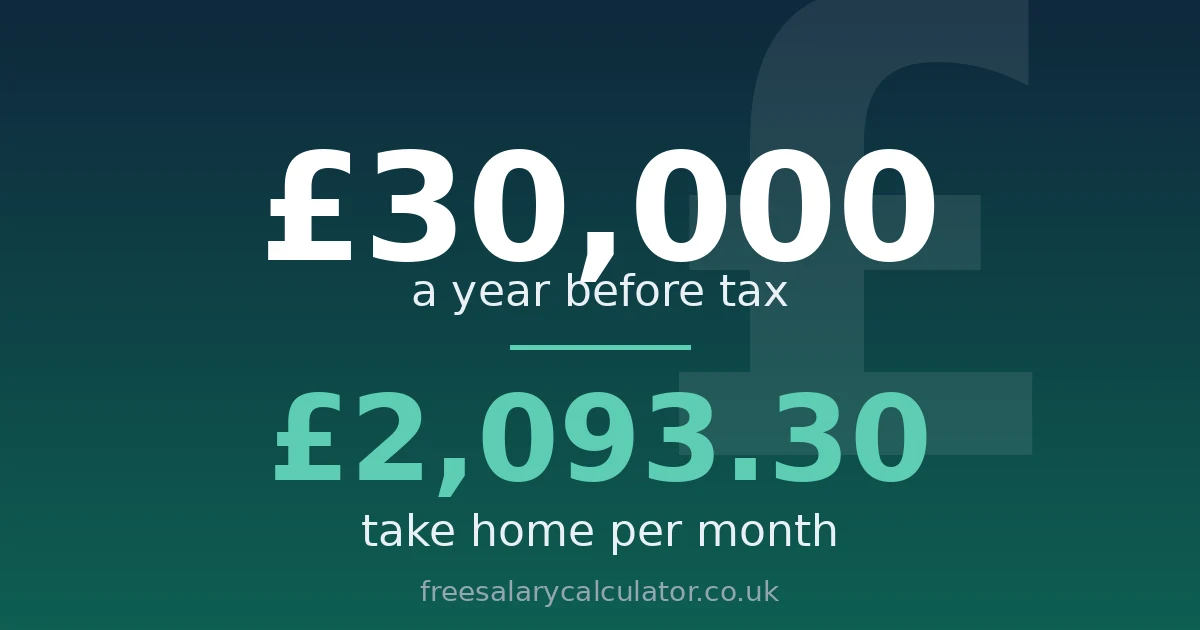
Yes, for most of the UK. Is £30,000 a good salary in the UK? After income tax and National Insurance you keep £2,093.30 a month, which sits above the legal minimum wage and reaches close to three quarters of the national median. It buys a comfortable life outside London, though the capital stays a stretch.
Is £30,000 a good salary? It is one of the most searched salary questions in Britain, and the honest answer is that it depends on where you live and what you need your money to do. After income tax and National Insurance you take home £2,093.30 a month, enough to sit comfortably above the legal minimum and not far below the typical full time wage. In this guide we break down exactly what £30,000 leaves in your pocket each month, how it compares with the national picture, and whether it is enough to live well in different parts of the country.
What £30,000 looks like after tax
On a £30,000 salary in the 2026/27 tax year you pay £3,486 in income tax and £1,394.40 in National Insurance, leaving £25,120 for the year. That works out at £2,093.30 a month or £483.07 a week in your pocket. The first £12,570 is tax free thanks to the personal allowance, and everything above it up to £50,270 is taxed at the 20% basic rate. These figures assume the standard 1257L tax code with no adjustments. For the full month by month numbers, see our full £30,000 after tax breakdown. If your situation is different, for example you pay into a pension or have a student loan, you can work out your exact take home pay with our free UK salary calculator. On student loans the news is mixed: with a Plan 2 loan you repay 9% of earnings above £29,385, which comes to just £4.61 a month on this salary. In Scotland the tax bands work differently, and £30,000 gives £2,096.21 a month there. You can read how UK income tax bands work if you want the detail behind these numbers.
How £30,000 compares with the UK average
The Office for National Statistics publishes the Annual Survey of Hours and Earnings each year, and the latest figures put the median full time salary at £39,039. The median is the middle point, with half of full time employees earning more and half earning less. At £30,000 you earn about 77% of that median, which puts you within touching distance of the typical full time wage rather than far below it. That comparison covers every industry and region, from high paid finance roles in London to shop floor jobs elsewhere. Age and career stage matter too. Early in your career £30,000 can be a strong position, while for an experienced worker in a high demand field it might be the floor rather than the ceiling.
Is £30,000 a good salary compared with the minimum wage?
The National Living Wage is £12.71 an hour for workers aged 21 and over from April 2026, set on the advice of the Low Pay Commission. Work full time at 37.5 hours a week on that rate and you earn about £24,785 a year before tax. That puts £30,000 a clear £5,215 above the legal floor for full time work, a much more comfortable margin than lower salaries give. It also clears the voluntary real Living Wage. The Living Wage Foundation works out the real Living Wage from actual living costs, and on 15 October 2026 it raised the rate to £14.10 an hour across the UK and £15.45 in London. A full time worker on the UK rate earns about £27,500 a year, so £30,000 sits above what the Foundation describes as a decent standard of living.
Is £30,000 a good salary in London?
In London, honestly, it is tight but workable. Average rents in the capital were £2,280 a month in early 2026 according to ONS figures, which is more than the entire £2,093 take home pay on this salary. Living alone in London on £30,000 is not realistic for most people. But sharing a flat changes the maths completely: a room in a shared house in zones 2 to 4 typically costs far less than a whole flat, and commuting from further out brings rents down further. On top of rent come higher transport costs, with commuting into central London adding a large monthly bill of its own. Many Londoners on this salary make it work by sharing, keeping a tight budget, and treating pay rises as the route to breathing room.
Is £30,000 a good salary outside London?
Outside the capital the picture is much brighter. The average UK private rent was £1,400 a month in August 2026, also from ONS figures. That is about 67% of a £2,093 monthly take home pay, which still takes a big bite but leaves real room for bills, food and saving if you rent below the average. And the average hides huge regional gaps. In the North East, average rents were £772 a month, about 37% of your take home pay, which leaves genuine breathing room for bills, transport, leisure and saving. Cities such as Manchester, Leeds, Sheffield and Newcastle sit between these extremes, with rents far below London levels. If you live with family, share with a partner, or already own your home, £30,000 stretches further still.
What kinds of jobs pay around £30,000?
You will see salaries around £30,000 advertised for roles such as newly qualified nurses on NHS Band 5, team leaders, junior project coordinators, sales executives, experienced teaching assistants, junior software testers and estate agents. Many are full time PAYE roles with set hours, which makes budgeting straightforward because your monthly pay is predictable. Some include extras that add real value, such as paid overtime, commission, staff discounts, or a workplace pension with employer contributions above the legal minimum. When comparing offers, look at the whole package, not just the headline salary.
Is £30,000 a good salary for a first job?
For a graduate or anyone starting out, yes, it is a strong start. It clears both the legal minimum and the real Living Wage with room to spare, it is a full time wage you can plan a budget around, and it gives you room to save while you build experience. What matters most at this stage is progression. Ask about pay reviews, the training on offer, and the typical salary for the next step up. A £30,000 starting salary with a proper pay structure and training beats a slightly higher one with no way to grow.
How can you make £30,000 go further?
A few practical moves can stretch this salary further than you might expect:
- Check your tax code. HMRC sets the standard code at 1257L, and being on the wrong code can mean you overpay tax during the year.
- Pay into your pension through salary sacrifice if your employer offers it. Putting 5% in drops monthly take home to £2,003.30, but you save income tax and National Insurance on the contribution while building long term savings.
- Weigh up any pay rise properly. A £2,000 rise sounds good, but check what it really adds each month with our salary comparison tool.
- See the bigger picture. Our take home pay tables show what each salary level really leaves you with, which helps you set your next target.
Frequently asked questions
Is £30,000 a good salary for a single person?
It can be, outside London. A single person renting a modest flat in the Midlands or the North can live on £2,093 a month with careful budgeting, and still put money aside. In London and much of the South East, a single person on £30,000 will almost certainly need to share accommodation to make the numbers work.
How much is £30,000 a month after tax?
£2,093.30 a month in England, Wales and Northern Ireland in the 2026/27 tax year, or £2,096.21 a month in Scotland.
Is £30,000 more than the minimum wage?
Yes, comfortably above it. Full time work at the National Living Wage of £12.71 an hour comes to about £24,785 a year, so £30,000 clears the legal floor by more than £5,000.
Can you live alone on £30,000?
Outside London and the South East, yes, with a sensible budget, especially in areas with lower rents. In London it is very difficult without sharing, because average rents there exceed the monthly take home pay on this salary.
So is £30,000 a good salary?
In 2026, £30,000 is a solid wage that clears the legal minimum and the real Living Wage, sits within reach of the national median, and supports a comfortable life in most of the country. In London it takes sharing and discipline. Wherever you are, knowing your exact take home pay is the first step to making it work, and you can check yours in seconds with our free calculator. If you are weighing a lower offer, our guide to whether £25,000 is a good salary runs the same honest numbers.