
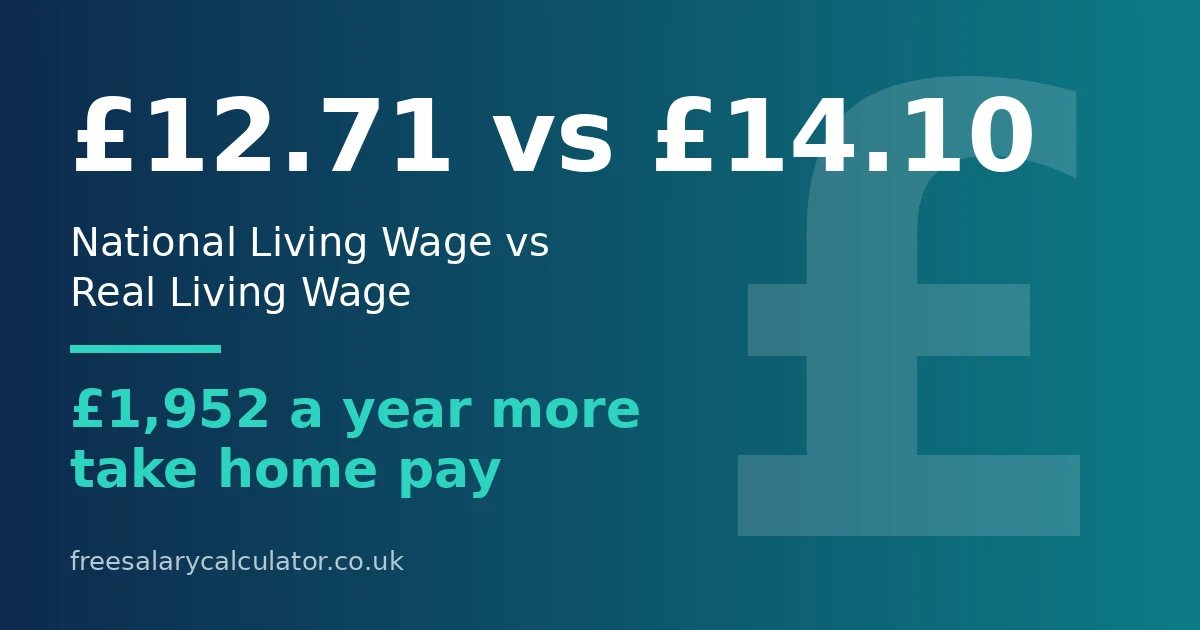
Minimum wage vs living wage comes down to who sets the rate and whether the law backs it. The legal National Living Wage is £12.71 an hour for workers aged 21 and over, while the voluntary Real Living Wage is £14.10 an hour, or £15.45 in London. That gap is worth £1,952 a year in take home pay.
What is the difference between the minimum wage and the living wage?
The minimum wage is the legal floor for hourly pay in the UK. The government sets it, HMRC enforces it, and every employer must pay at least the rate for each worker’s age group.
The living wage most people mean is the Real Living Wage. The Living Wage Foundation sets it, the Resolution Foundation calculates it from the real cost of living, and employers pay it by choice, not by law.
The name causes the confusion. The legal rate for workers aged 21 and over is itself called the National Living Wage, so two different rates share the word living. This guide uses National Living Wage for the legal rate and Real Living Wage for the voluntary rate, so the minimum wage vs living wage comparison stays clear throughout.
The age rules differ too. The legal National Living Wage starts at 21, with lower legal rates for younger workers. The Real Living Wage starts at 18, so an 18 year old at a Real Living Wage employer earns the full rate.
What are the current minimum wage and living wage rates?
The statutory rates below have applied since 1 April 2026, when the government accepted the Low Pay Commission recommendations in full. The Real Living Wage rates were announced on 15 October 2026, and accredited employers have until 1 May 2027 to bring them in.
| Rate | Who it covers | Per hour | Legal? |
|---|---|---|---|
| National Living Wage | Aged 21 and over | £12.71 | Yes |
| National Minimum Wage | Aged 18 to 20 | £10.85 | Yes |
| National Minimum Wage | Aged 16 to 17 | £8.00 | Yes |
| National Minimum Wage | Apprentice | £8.00 | Yes |
| Real Living Wage | Aged 18 and over, outside London | £14.10 | No, voluntary |
| London Living Wage | Aged 18 and over, in London | £15.45 | No, voluntary |
The apprentice rate applies if you are under 19 or in the first year of your apprenticeship. After the first year, an apprentice aged 19 or over moves to the rate for their age group.
The Real Living Wage rose by 65p an hour in October 2026, up 4.8% outside London and 4.4% in London. Nearly 17,000 employers are accredited Living Wage employers, according to the Living Wage Foundation, and almost half a million of their workers were due a pay rise when the new rates were announced.
Here is a detail many guides miss. The statutory National Living Wage of £12.71 is now higher than the old Real Living Wage of £12.60 that applied outside London in 2025/26. The legal floor has overtaken last year’s voluntary rate, though it still sits £1.39 below the new Real Living Wage of £14.10.
How much do you take home on the minimum wage vs living wage?
The table below shows take home pay for a full time week of 37.5 hours, 52 weeks a year, on the standard 1257L tax code, with no pension contributions and no student loan. The figures use the 2026/27 personal allowance of £12,570, income tax at 20% above it, and employee National Insurance at 8% above it. They cover England, Wales and Northern Ireland, since Scotland sets its own income tax bands.
| Hourly rate | Gross a year | Income tax | National Insurance | Take home a year | Take home a month |
|---|---|---|---|---|---|
| £12.71 National Living Wage | £24,785 | £2,443 | £977 | £21,364 | £1,780 |
| £14.10 Real Living Wage | £27,495 | £2,985 | £1,194 | £23,316 | £1,943 |
| £15.45 London Living Wage | £30,128 | £3,512 | £1,405 | £25,211 | £2,101 |
| £10.85 aged 18 to 20 | £21,158 | £1,718 | £687 | £18,753 | £1,563 |
| £8.00 under 18 or apprentice | £15,600 | £606 | £242 | £14,752 | £1,229 |
Figures are rounded to the nearest pound, so a row may differ by £1. The source for the statutory rates is GOV.UK and the source for the voluntary rates is the Living Wage Foundation.
That is the minimum wage vs living wage gap in cash terms. On the Real Living Wage you take home £1,952 a year more than on the National Living Wage, or £163 a month more. In London the gap grows to £3,847 a year, or £321 a month.
The gross gap is bigger than the take home gap, because every extra pound above £12,570 loses 20p in income tax and 8p in National Insurance. You keep 72p of each extra pound in this band, so a £2,711 gross rise becomes £1,952 in your pocket.
If you work a 40 hour week instead, the National Living Wage pays £26,437 gross and £22,554 take home a year, while the Real Living Wage pays £29,328 gross and £24,636 take home. In London a 40 hour week on £15.45 pays £32,136 gross and £26,658 take home. The minimum wage vs living wage gap holds at 40 hours too, just on bigger numbers.
Worked example: a full time week on £12.71 vs £14.10
Take two shop assistants who both work 37.5 hours a week. One earns the National Living Wage of £12.71 an hour and the other earns the Real Living Wage of £14.10 an hour at an accredited employer.
The first assistant earns £476.63 gross a week and takes home £410.85 a week. The second earns £528.75 gross a week and takes home £448.38 a week. This is what minimum wage vs living wage looks like on a payslip.
Over a month the Real Living Wage assistant takes home £1,943 against £1,780. Over a year the difference is £1,952, which covers about a month of groceries for many households. Use our free UK salary calculator to run your own hours and rate.
Our £25,000 after tax breakdown is the closest ready made check for the National Living Wage salary of £24,785, and our £30,000 after tax breakdown is the closest check for the London Living Wage salary of £30,128.
What does the living wage pay in London?
In London the minimum wage vs living wage gap is wider than anywhere else. The London Living Wage of £15.45 an hour is £2.74 above the National Living Wage, which is £5,343 more gross pay a year on a full time week and £3,847 more take home pay.
The London rate reflects the higher cost of housing and travel in the capital, which is why it is set separately from the UK rate. The Resolution Foundation calculates both rates from household costs, and the Living Wage Commission oversees the method.
If you work in London but live outside it, the rate depends on where your job is based, not where you live. Check your contract or ask your employer which rate applies to your role.
London is also where the voluntary rate matters most. A 21 year old in London on the legal minimum takes home £21,364 a year, while the same worker at an accredited Living Wage employer takes home £25,211. That £3,847 gap is the largest on this page.
What about workers aged 18 to 20?
For younger workers the minimum wage vs living wage gap is the biggest of all. The legal rate for ages 18 to 20 is £10.85 an hour, while the Real Living Wage pays £14.10 from age 18, a difference of £3.25 an hour.
On a full time week that is £6,338 more gross pay a year and £4,563 more take home pay. In London the gap for an 18 to 20 year old is £4.60 an hour, worth £8,970 gross and £6,458 take home a year.
This is the age group where checking your employer matters most. A 19 year old in a supermarket on the legal rate takes home £18,753 a year, while the same worker at an accredited employer takes home £23,316. The only difference is the employer, not the job.
Apprentices have their own rate of £8.00 an hour, which applies if you are under 19 or in the first year of your apprenticeship. Our £20,000 after tax breakdown is a useful sense check for younger workers, since the 18 to 20 full time salary of £21,158 sits just above it.
What changes in April 2027?
The April 2027 rise narrows the minimum wage vs living wage gap, but it does not close it. The government accepted the Low Pay Commission recommendations in full on 28 October 2026, and from 1 April 2027 the National Living Wage rises 3.9% to £13.21 an hour.
The 18 to 20 rate rises to £11.27 an hour, and the 16 to 17 and apprentice rates rise to £8.31 an hour. HM Treasury says a full time worker on the National Living Wage will earn £910 more gross pay a year, and around 2.3 million workers are expected to benefit.
Even after the rise, the National Living Wage of £13.21 will sit 89p below the current Real Living Wage of £14.10. The Living Wage Foundation announces its next rates in October 2027, so the voluntary rate may move again before then.
The statutory rates change every April, while the Real Living Wage is announced each October. If you want to know where you stand, check the official rates on the GOV.UK National Minimum Wage rates page and the voluntary rates on the Living Wage Foundation website.
How do you check your employer pays you correctly?
Start with your payslip. Divide your gross pay for the period by the hours you worked in that period, including mandatory training and time spent travelling between sites. If the result is below the rate for your age, you may be underpaid.
Knowing the minimum wage vs living wage rates for your age is the first step, because you cannot check a payslip without the right rate.
Watch for the common traps. Tips and service charges do not count towards the minimum wage, so your base rate must meet it before tips are added. Deductions for uniforms or till shortages must not take your pay below the minimum, and travel time between assignments counts as working time.
If the numbers do not add up, raise it with your employer first, since many cases are payroll errors. If that does not fix it, you can report it to HMRC, which enforces minimum wage law and can order back pay. Employers who underpay can face fines of up to 200% of the underpayment, capped at £20,000 per worker, and can be publicly named.
Your tax code matters too. The standard code is 1257L, and if yours ends in W1, M1 or X you are on an emergency code that can distort one month’s tax. Read our UK income tax guide for the bands, or convert your pay with our hourly wage calculator.
One last note on the figures in this guide. They assume no pension contributions and no student loan. Workplace pension contributions and student loan repayments come off on top of tax and National Insurance, so your payslip may show a lower take home figure than the tables here.
Frequently asked questions
What is the minimum wage vs living wage?
The minimum wage is the legal floor for hourly pay, set by the government and enforced by HMRC. The living wage most people mean is the Real Living Wage, a voluntary rate set by the Living Wage Foundation from the real cost of living. In 2026/27 the legal rate is £12.71 an hour for workers aged 21 and over, while the Real Living Wage is £14.10 an hour, or £15.45 in London.
Is the Real Living Wage a legal requirement?
No. The Real Living Wage is voluntary, so an employer can pay the legal minimum instead. Nearly 17,000 employers have chosen accreditation with the Living Wage Foundation, and accredited employers must pay the rate to all staff aged 18 and over.
How much do you take home on £12.71 an hour?
On a 37.5 hour week you take home £21,364 a year, or £1,780 a month, after income tax and National Insurance. On a 40 hour week you take home £22,554 a year, or £1,880 a month. Both figures assume the standard 1257L tax code with no pension or student loan deductions.
Does the Real Living Wage apply to workers under 21?
Yes. The Real Living Wage applies from age 18, while the legal National Living Wage starts at 21. That is why the gap is largest for 18 to 20 year olds, who earn £10.85 an hour on the legal rate and £14.10 at an accredited Living Wage employer.
Will the minimum wage rise in April 2027?
Yes. The National Living Wage rises to £13.21 an hour from 1 April 2027, the 18 to 20 rate rises to £11.27, and the 16 to 17 and apprentice rates rise to £8.31. HM Treasury says a full time worker on the National Living Wage will earn £910 more gross pay a year.
The verdict
So is the minimum wage vs living wage gap worth chasing? For a full time worker it is worth £1,952 a year in take home pay, or £3,847 in London, and for an 18 to 20 year old it is worth £4,563 a year. That is real money for the same hours and the same job.
Check whether your employer is an accredited Living Wage employer, and check your payslip against the rate for your age. If the numbers do not match, ask your employer first, then HMRC. Run your own hours through our free calculator to see exactly what you should take home.